Wolfgang Pauli
July 2026
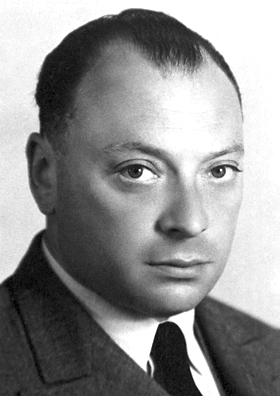
Who he was
Wolfgang Pauli (1900–1958) was an Austrian theoretical physicist. His 1925 exclusion principle — no two identical fermions (particles like electrons) can occupy the same quantum state simultaneously — is one of the foundational rules of quantum mechanics, earning him the 1945 Nobel Prize in Physics.
What he’s known for on this site
The Pauli exclusion principle underlies several real results used throughout this site: it’s the reason atomic orbitals fill in shells rather than collapsing to the same state (relevant to Hydrogen Orbital Probability Density), the source of the asymmetry penalty in the semi-empirical mass formula (unequal proton/neutron counts cost energy specifically because of Pauli exclusion), and the microscopic reason exchange interaction produces the magnetic ordering patterns described in Four Ways Atomic Spins Can Order.
Catalog status: Proven Systems
The exclusion principle is core, extensively confirmed quantum mechanics — it’s the direct reason ordinary matter has volume and doesn’t collapse, among the most consequential results in physics.
Mentioned on this site
- Semi-Empirical Mass Formula — the asymmetry term
- Four Ways Atomic Spins Can Order — exchange interaction
- Hydrogen Orbital Probability Density — orbital shell structure
Where this touches PBT
PBT’s papers use Pauli-exclusion-dependent results (the mass formula’s asymmetry term, orbital structure) as imported standard physics, without offering an independent mechanical account of exclusion itself from the aether framework.