Albert Michelson & Edward Morley
July 2026
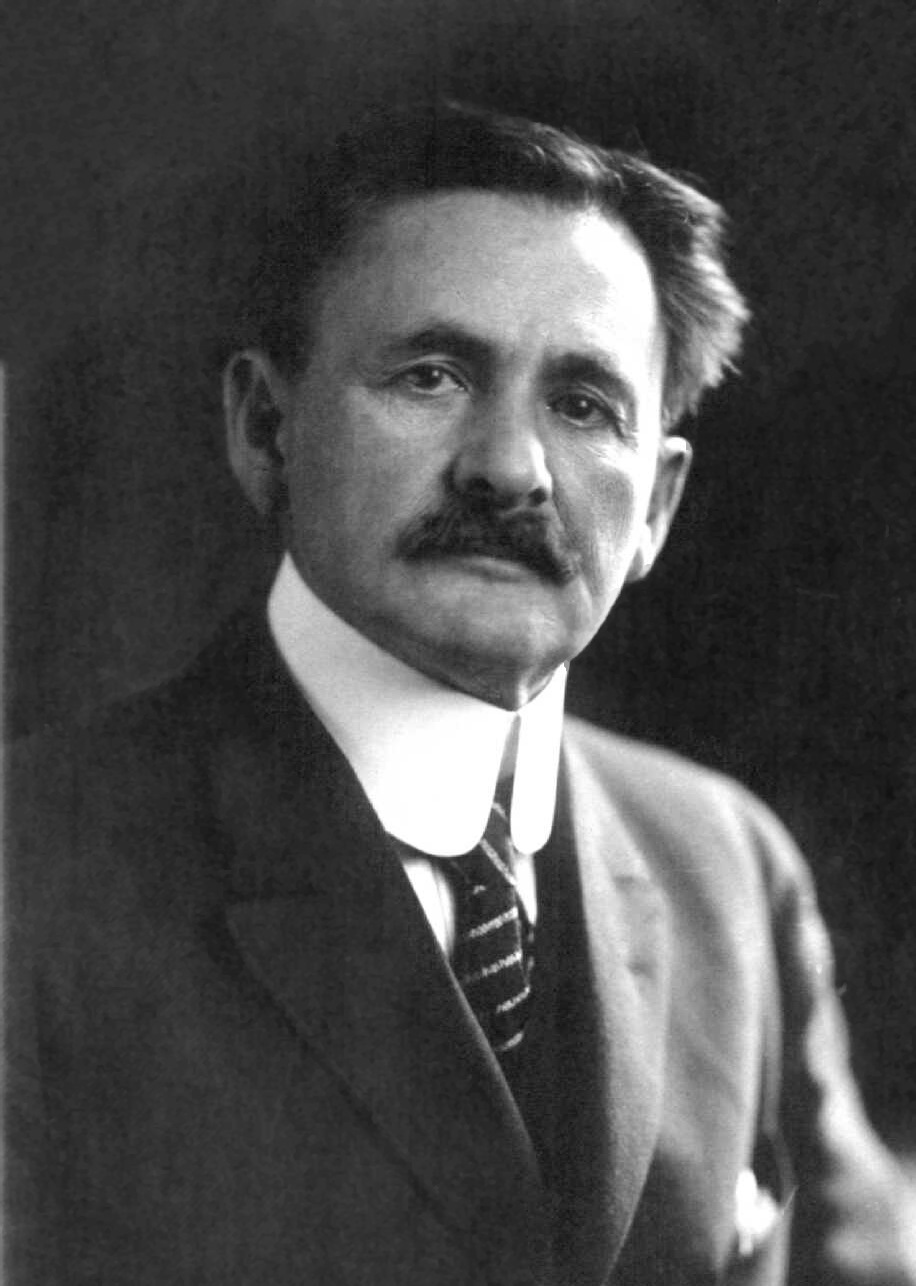
Who they were
Albert Michelson (1852–1931) was a Prussian-born American physicist, and Edward Morley (1838–1923) an American chemist. Together at Case Western Reserve in 1887, they ran the most precise experiment of its era to detect Earth’s motion through the hypothesized “luminiferous aether” — the fixed medium 19th-century physics assumed light waves needed to propagate through. Michelson later received the 1907 Nobel Prize in Physics, largely for the precision interferometry this experiment pioneered.
What they’re known for on this site
The Michelson-Morley experiment found a null result — no detectable difference in light’s speed depending on direction relative to Earth’s motion — to a precision far exceeding what the aether hypothesis predicted, and the result has held up under many increasingly precise repetitions since. This is one of the most consequential negative results in the history of physics, and this site treats it directly in Disproven Theories as the reason the classical, fixed aether concept is dead.
Catalog status: Proven Systems
The null result itself is proven beyond doubt — repeated and refined for over a century with no detected aether wind.
Mentioned on this site
- Disproven Theories — the full account of what the experiment falsified
- Einstein-Aether Theory — why PBT’s own dynamical aether isn’t automatically pre-refuted by this result
Where this touches PBT
This is one of the most important distinctions this entire site makes: PBT’s own aether field is explicitly not a revival of the 19th-century fixed aether Michelson and Morley ruled out — it’s a dynamical field that responds to the physics around it, which is the specific, real reason it isn’t automatically contradicted by their null result. The site is direct that PBT’s papers rely on Einstein-aether theory’s own published reasoning for that distinction, rather than offering new reasoning of their own.