Georges-Louis Le Sage
July 2026
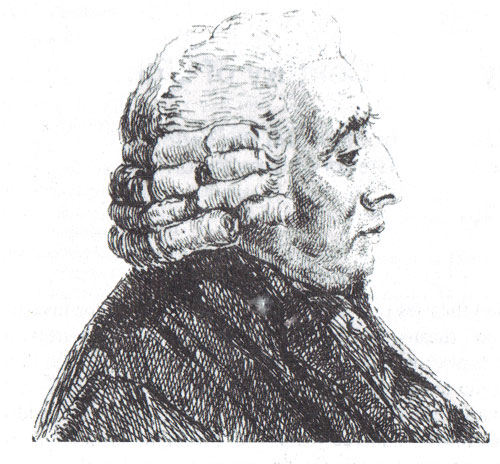
Who he was
Georges-Louis Le Sage (1724–1803) was a Swiss physicist and mathematician. In the 18th century, he proposed one of the first mechanical explanations for gravity: that it results from a flux of tiny, fast-moving particles bombarding all matter from every direction, with objects “shadowing” each other from that flux and getting pushed together — the direct historical ancestor of Pressure-Based Theory’s own core mechanism.
What he’s known for on this site
Le Sage’s push gravity is discussed directly in Disproven Theories — historically rejected primarily for two real physical problems: drag (particles bouncing off moving objects should measurably slow them down, which isn’t observed) and heating (the particle flux needed to produce gravity’s real strength would heat every object to destruction). Paper 1 is explicit that PBT is a direct extension of Le Sage’s idea to infinite hierarchies specifically to try to answer these two objections, not a break from it.
Catalog status: Disproven/Falsified Theories
Classical Le Sage gravity, as originally proposed, is genuinely falsified by the drag and heating problems — not a matter of taste or fashion, but real physical objections with no adequate 18th/19th-century answer.
Mentioned on this site
- Disproven Theories — the falsifying arguments in full
- Paper 1 and Paper 2 — where PBT explicitly builds on and extends his idea
- Pressure — PBT’s own stated (unverified) answer to the drag objection
Where this touches PBT
This is the single most direct historical ancestor of Pressure-Based Theory on this entire site. PBT’s own papers are direct that “infinite-speed jumps” and similar mechanisms are stated answers to Le Sage’s drag/heating problems, not yet independently verified ones — see the editorial note on Paper 1 for the fuller treatment of how far that goes. See Pressure for PBT’s own plain-language statement of the drag answer specifically: particles fast and small enough that drag on large bodies is negligible.