Why Universal Time
13 September 2026
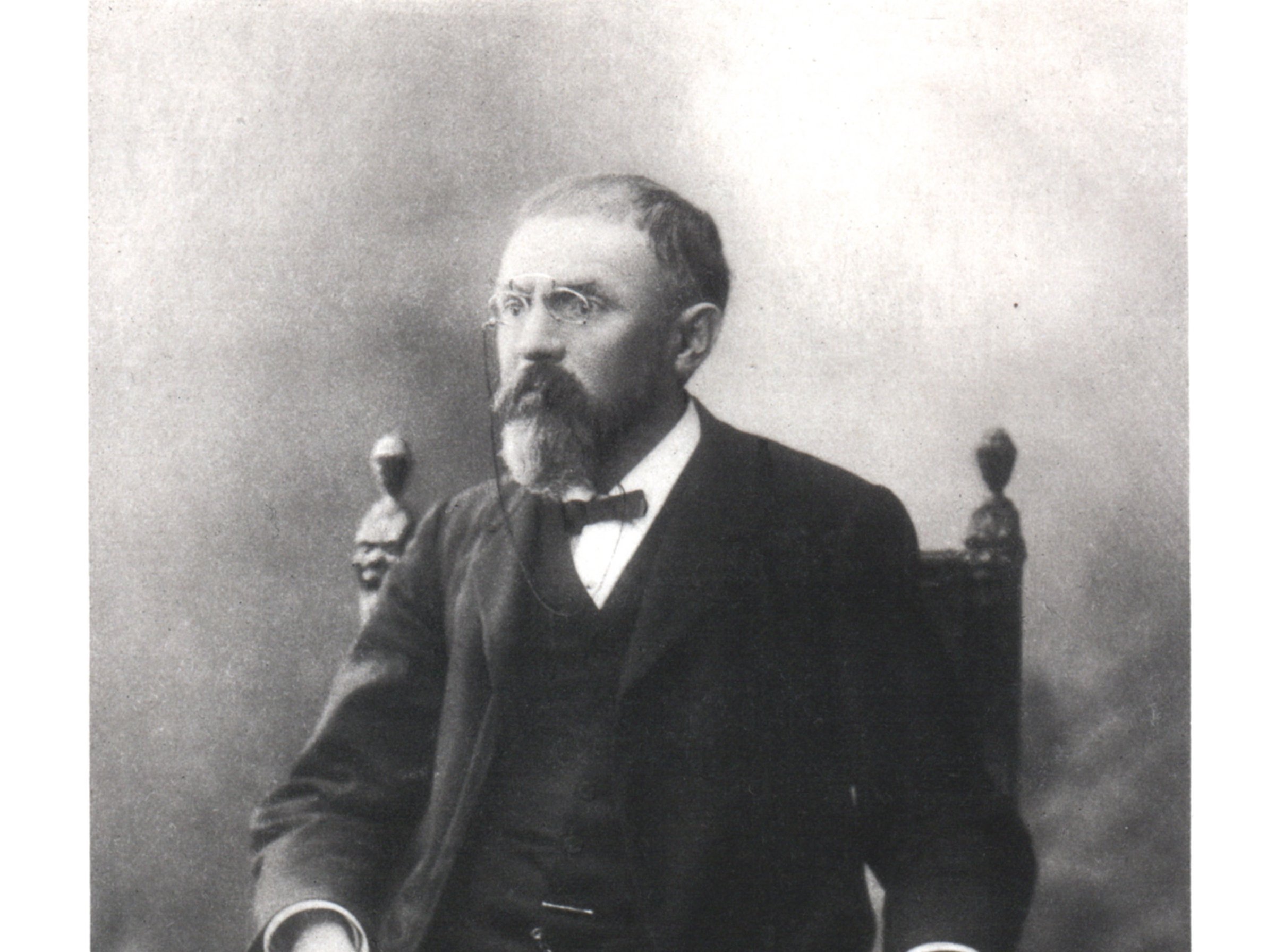 Henri Poincaré, who argued in 1898 that simultaneity between distant clocks rests on a definition. Photo: Henri Manuel, public domain, via Wikimedia Commons.
This site has worked through the evidence for time dilation in two audits. The Test Confirms the Effect showed that a confirmed measurement does not prove the explanation attached to it. What the Clocks Were showed that every high-precision measurement of the effect is the same physical process, an electromagnetic oscillation in an atom, and that the step from “the oscillation changed” to “time changed” is a reading laid over the instrument. How It Could Work presents a universal-time model and re-runs it against the measurements. The reading order is that one: the test, the clocks, this argument, then the model.
This piece is the bridge between them: why I hold the position the model article builds on and the two audits leave open. The measurements are not in question anywhere below. The reading of them is, and I will say where that reading is mine.
What “relative time” asks you to accept
Special relativity’s mathematics is consistent and its predictions are correct. That is not the problem. The problem is what the standard reading of that mathematics says about time itself, and it says two things.
First, that there is no fact about what is happening now anywhere but here. Under the relativity of simultaneity, two observers moving past each other divide the universe into past, present, and future differently. Roger Penrose made the point vivid in 1989: two people walking past each other on a street, one toward the Andromeda galaxy and one away, disagree by several days about what is happening there right now. Not about what they can see, which arrives two and a half million years late for both, but about what is, at this moment, occurring. The Rietdijk-Putnam argument draws one conclusion: if every observer’s “now” is equally valid and they all differ, then no moment is privileged, and every event past and future exists as fully as the present one. Philosophers call this the block universe. Others, Howard Stein first, reply that the present was never more than local. Either way, relative time says the present is not a fact beyond here.
Second, that there is no fact about which of two separated clocks in relative motion runs slower. In special relativity an observer moving with clock A finds clock B running slow, and an observer moving with clock B finds clock A running slow, and both are correct. Relativity’s answer to the obvious question, which one is really slower, is that there is no such fact: rate comparisons between separated clocks are frame-relative, and the question has no frame-independent answer. The only definite comparison is a round trip or a signal exchange, and both readings compute it identically. That account is consistent, and my objection lies elsewhere. Each clock’s own rate is not in dispute on either reading; what relativity denies is that two separated clocks in relative motion stand in any rate relation that does not depend on the frame they are judged from. I hold that they do, which is to say I hold there is one time to compare them in.
Poincaré saw the root of this in 1898, before Einstein’s paper. To say two distant clocks are synchronized you need a rule, and the rule everyone uses, sending a light signal out and back and setting the far clock to the midpoint, assumes the light took equal time each way. Nothing measures that. Hans Reichenbach made the same point in the 1920s and philosophers of science have argued over it since; David Malament showed in 1977 that the standard choice is the one uniquely definable from relativity’s own causal structure, which is true and does not make it a measurement. Every measurement is a round trip. Which half took longer is, on the conventionalist reading, a convention; on Malament’s, fixed by the causal structure. On neither is it measured. Under universal time it is a fact the synchronization hides.
So when the model article says relative time “defies logic,” that means something specific, and it is a statement of my position rather than a theorem. The standard reading asks you to give up the present as a fact and to accept that which of two separated clocks in relative motion runs slower is not a fact. No measurement has ever required either. I decline both.
What universal time asks you to accept
One time, everywhere. One present, a fact whether anyone can measure it or not. Any two clocks, however far apart, with a definite rate relative to each other. When two clocks disagree, one of them actually ran slower, and there is a physical reason. And a real medium at rest in one frame, in which light travels and in which the one time is kept.
| Relative time | Universal time | |
|---|---|---|
| The present | local to each observer; no fact beyond here | one present, everywhere |
| Two separated clocks in relative motion | no frame-independent rate relation | one runs slower, as a fact |
| Distant simultaneity | frame-relative; within a frame, a convention or fixed by causal structure | a fact, hidden by light-signal synchronization; which frame keeps it is undetected |
| What it costs | the present as a fact | a frame of rest no experiment has detected |
| What the clocks say | the same numbers | the same numbers |
That reading has a price, and I will pay it up front. It requires a preferred frame of rest, and no experiment has ever detected that frame. Under universal time, an observer moving through the medium has shortened rods, slowed clocks, and clocks synchronized with an offset, all by the same motion, and those three effects together make the frame invisible to any round-trip measurement. Critics call this a conspiracy: why should every force and every material contract by exactly the same factor so that the medium hides itself? It is a fair question, and on the dynamical reading relativity does not answer it either: it postulates that every law of physics has the same form in every frame and derives the identical contraction from that postulate. Whether the geometry of Minkowski spacetime explains that symmetry or restates it is a live argument, Brown and Pooley on one side, Janssen and Norton on the other. Relativity takes it as a symmetry of spacetime or of the laws; universal time takes it as a property of matter moving through a medium. Harvey Brown’s 2005 book Physical Relativity argues the dynamical half of this at length without adopting a medium or a preferred frame, and John Bell argued in 1976 that the dynamical route is the older one and no less rigorous. Neither endorses the frame this project keeps; the position that does has its own, smaller literature under the name neo-Lorentzian relativity, Builder (1958) and Prokhovnik (1967) among its clearest statements.
What universal time buys for that price is ordinary logic back. The present is real. Which clock ran slower is a fact. The twin who traveled aged less because his clock ran slower, and the reason is the extra motion of his clock through the medium rather than a question about which twin was really moving. Two asides, not part of the argument. Quantum mechanics uses a single external time; a universal time would share Schrödinger’s single time parameter, but only if a universal-time account of gravity existed, which this project has not built, so that is a compatibility and not a solution to the problem of time or anything else. And Bell, in a 1986 interview, called a return to a Lorentz-style preferred frame the cheapest resolution of nonlocality without endorsing it as true; this project has not built that route either.
 Albert Michelson, whose 1887 null result is the one measurement both readings must reproduce, and the reason the contraction factor below is what it is. Photo: Harris & Ewing, 1918, Library of Congress, public domain, via Wikimedia Commons.
How universal time fits every clock measurement
This is the part the model package checks rather than argues, and it is the whole content of How It Could Work.
A clock is a mechanism. In this project’s model its tick is one round trip of a signal in a real medium, which is what an atom’s electromagnetic oscillation is if the electron is a standing wave around the nucleus. Move the clock through the medium and the signal has farther to go on one leg. Across the motion, the tick lengthens by exactly the factor γ; along the motion it lengthens by more, unless the clock contracts along its length by 1/γ, the one factor that makes the Michelson-Morley experiment come out null once nothing changes across the motion, an assumption the model article says only Ives-Stilwell tests. With that contraction the tick lengthens by the same γ in every orientation. That reproduces Ives-Stilwell, the measured slowing of a moving clock, gives the sign of Hafele-Keating, and is consistent, by construction, with the modern isotropy tests. Let a moving observer synchronize distant clocks by light signals (slow clock transport gives the same answer), and the offset that procedure forces makes them measure the same light speed in both directions and, through the same offset, see the stationary clocks as the slow ones; the model derives the offset, and the reciprocity follows from it. Let a standing wave climb a gravitational potential and conserve its energy, and its frequency shifts by ΔΦ/c². That reproduces Pound-Rebka and, combined with the slowing of the moving satellite clock above, the GPS net correction.
None of that is new physics. It is Lorentz’s 1904 theory with a mechanism made explicit, plus Einstein’s 1907 energy argument for the gravitational shift, and under light-signal synchronization it agrees with the kinematic clock-and-rod measurements of the class in that table, across the hundred and twenty years they have been made, because the two readings are mathematically equivalent there. The package runs eight checks, says which three test a measurement and which five are consistency checks, a sign, or a bound, and breaks the model four ways on purpose to show the checks can fail. It passes. The compatibility is a script, not an assertion.
Why relative time is not needed
Every result anyone has measured in the kinematic clock-and-rod sector comes out of one universal time and one medium speed. The Lorentz transformations still appear, as the rule for converting a moving observer’s slowed clocks and shortened rods into the universal time, and the numbers are identical because the algebra is identical. What changes is what the symbols mean, and a difference in meaning that produces no difference in any number is the kind of thing a physicist is entitled to choose on grounds other than measurement.
The equivalence in that sector is settled in the literature. The mainstream keeps relative time on grounds other than measurement too: economy, which was Einstein’s reason in 1905 when he called the ether superfluous (überflüssig), and the geometric unification Minkowski gave it in 1908, which general relativity is built on. This project chooses on grounds other than measurement as well, and I have said what they are.
Gravity is a different matter and this site says so plainly. The frequency shift in a gravitational field comes out of universal time and energy conservation, and that is one line of general relativity. Light bending, the precession of Mercury, frame dragging, gravitational waves, and the expansion of the universe are the rest, and general relativity accounts for all of them with dynamical spacetime. A universal-time account owes the same, through real effects in a real medium, and this project has not delivered it. This project’s own calculations have narrowed but not cleared its gravity mechanism, pressure shadowing, which still owes an answer to the heating objection, and its candidate for gravitational waves failed against LIGO’s polarization data. So the precise claim is this: relative time is not needed for anything anyone has measured about clocks and rods, and whether gravity needs it is open. Solving the universe without it is a program, not an accomplishment.
Where this leaves it
What this project did: it separated the measurements from the reading in three companion pieces, adopted universal time as its stated working ontology on 2026-09-03, and built and reviewed a model that reproduces three of the clock measurements and the sign of a fourth under it. One correction this piece itself carries: an earlier draft called the reciprocal slowing of separated clocks a contradiction. It is not; relativity denies there is a fact to contradict. This piece states the objection as what it is, a position about whether separated clocks share a time.
The re-runnable proof is the model package, which any reader can download and break. The mechanism, stated plainly: clocks are standing waves in a medium, motion through the medium lengthens their round trip, contraction along the motion at the factor Michelson-Morley requires makes the effect isotropic, and light-signal synchronization produces the apparent reciprocity. One time underneath all of it.
Compared against the documented standard: this is the neo-Lorentzian reading of relativity, a recognized minority position. Bell 1976 is the clearest short statement of the dynamical approach and Brown 2005 the book-length one, and neither adopts the preferred frame this project does; Builder 1958 and Prokhovnik 1967 do. This project conforms to the dynamical reading in what it keeps, real effects on matter, and goes past it in keeping one time. It falls short of the standard in the two places every version of the frame commitment does: it cannot detect the frame it needs, and it has produced no prediction that differs from relativity’s. And it falls short in a third place of its own: it has no account of gravity beyond the frequency shift.
The thesis, then, in its defensible form. Relative time, as a claim about time itself, asks you to give up the present and to accept that which of two separated clocks in relative motion runs slower is not a fact, and no measurement has ever required either. Universal time gives both back at the cost of a frame you cannot see, a cost relativity pays, on the dynamical reading, as a symmetry taken rather than explained. The clocks agree with both readings. As I read it, the logic favors one.
Notes on sources, and how firm each claim is
- Penrose 1989 and the Rietdijk-Putnam argument. Penrose’s illustration is in The Emperor’s New Mind (1989); “several days” is the figure usually derived from walking speed and the 2.5-million-light-year distance. Rietdijk (1966) and Putnam (1967) made the argument from the relativity of simultaneity to the block universe; Stein (1968) is the standard reply.
- Poincaré 1898, Reichenbach, Malament 1977. Poincaré’s “La mesure du temps” (1898) is the origin of the conventionality-of-simultaneity point; Reichenbach’s is the 1920s formulation; Malament’s 1977 result, that Einstein synchronization is uniquely definable from relativity’s causal structure, is the strongest reply to conventionalism, and the Stanford Encyclopedia of Philosophy still describes the question as unsettled. This project’s own one-way calculation, in its derivation record, derives the synchronization offset rather than assuming it.
- Bell 1976, Brown 2005, Bell 1986. Bell, “How to teach special relativity,” Progress in Scientific Culture 1 (1976), reprinted in Speakable and Unspeakable in Quantum Mechanics: a pedagogical argument that the facts oblige neither philosophy. Brown, Physical Relativity: Space-time Structure from a Dynamical Perspective (Oxford, 2005): a dynamical explanation that does not require a privileged frame. Bell’s “cheapest resolution” remark is from his interview in Davies and Brown, The Ghost in the Atom (1986). All three are named for what they argue; the one quoted word, “cheapest,” is Bell’s. Builder, “Ether and Relativity,” Australian Journal of Physics 11, 279 (1958), and Prokhovnik, The Logic of Special Relativity (Cambridge, 1967), are the neo-Lorentzian statements named in the body.
- “Settled in the literature.” The empirical equivalence of Lorentz Ether Theory and special relativity under Einstein synchronization is textbook and is formalized in the Robertson (1949) / Mansouri-Sexl (1977) test theory. This project verified Einstein’s 1905 “superfluous” (überflüssig) against the paper; Minkowski’s 1908 Cologne lecture is the source of the geometric unification.
- Review disclosure. This piece went through two read-only adversarial passes and this project’s Grok hostile-read before its author’s read-through. The first pass found the reciprocity argument stated against a reading relativity does not hold; the section and the close were rewritten rather than patched, and the correction is stated in the body. The second pass found the rewritten commitment still misstated what relativity denies (each clock’s own rate is not in dispute; the rate relation between separated clocks is), and it was corrected again.